
A new report from economists at UNLV released at its annual conference suggests while no recession is expected in the near term, the economic climate in Southern Nevada shows signs of trouble but has the ability to stabilize in the coming months.
Indexes tracked by the Center For Business and Economic Research at UNLV have shown a downward trend since March 2022 — always a sign of a potential recession ahead, according to the report released at its annual breakfast at the Durango Casino & Resort.
Other warning signs appear in seasonally adjusted data analysis tracking taxable sales, gross gaming revenue, visitor volume, Harry Reid International Airport passenger volume and the hotel-motel occupancy rate have fallen since February 2024 when Las Vegas hosted the Super Bowl, the report said.
At the national level, the reemergence of inflation as a policy concern has kept the Federal Reserve from any big reductions in the federal funds rates that could lead to lower interest rates. It made a combined 50 basis points in cuts in September and October with no indication if more are coming when it meets in December, the report said.
In addition, job gains have slowed significantly in Clark County, signaling a softening in the labor market. The unemployment rate has stalled at a rate of 1 to 2 percentage points higher than the national rate, after significant recovery from its post-pandemic peak. It has now increased slightly since April in tandem with the national rate.
While the gaming industry has recovered since the pandemic, 2025 has seen declines in tourism and hotel occupancy and gaming revenues remaining flat.
“Absent a new wave of a coronavirus variant, a major financial crisis leading to a significant recession, assuming the war in Ukraine will not widen in scale, and the financial system remains stable, the Southern Nevada economy and the local tourism sector will experience a mild contraction in much economic activity in the rest of 2025, and in 2026, and 2027,” the report said.
CBER predicts that visitor volume decreases by 6 percent in 2025, increases by 2.4 percent in 2026 and decreases by 0.2 percent in 2027, with total visitors over the time frame between 39 to 40 million per year.
This slowdown in visitors leads to decreases in hotel occupancy of 3 percent 0.4 percent and 2.9 percent in 2025, 2026 and 2027, respectively. CBER also forecasts gross gaming revenue to decrease by 1.7 percent, 3 percent and 1.9 percent, respectively, in 2025, 2026 and 2027. Employment is forecasted to continue its positive, but slowing, growth at 0.7 percent, 1.3 percent and 0.1 percent in 2025, 2026 and 2027, respectively, for a total employment of 1.177 million workers with growth continuing in sectors like health care and professional services, the report said.
CBER predicts the unemployment rate to decrease by 0.2 percentage points in 2025 but increase 0.3 percent and 1 percentage points in 2026 and 2027, respectively. The forecasted average unemployment rates for all three years is 5.7 percent, 6 percent and 6.9 percent, respectively.
“Visitor volume, gross gaming revenue, employment and the unemployment rate respond to the business cycle, as we anticipate slower national economic activity as the Fed navigates toward the soft landing,” the report said. “In other words, since the national economy plays an outsized role in Nevada’s and Southern Nevada’s economic outlook, CBER’s current forecast for Nevada shows a slowing, but predictable path for the economy.”
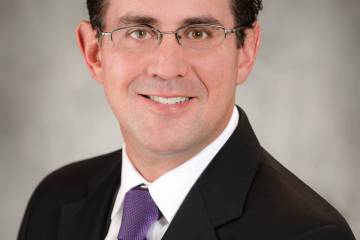
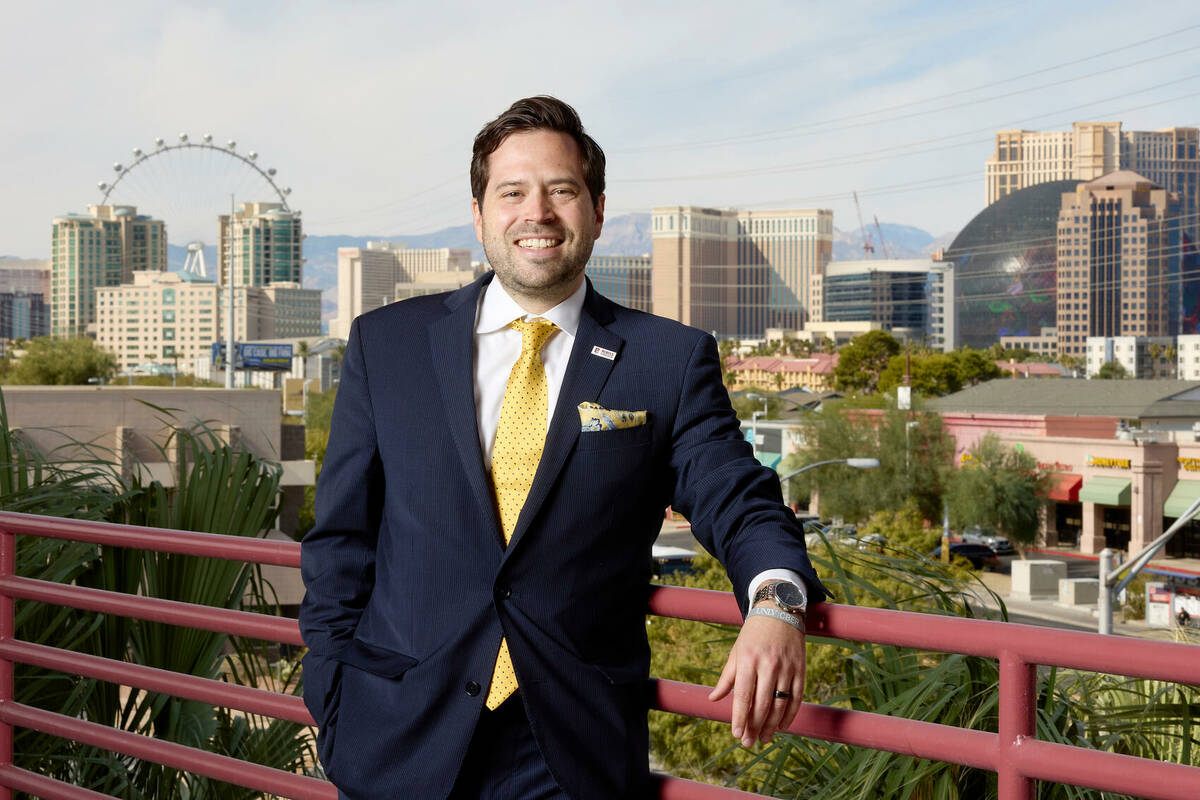
Las Vegas is tied to how the American consumer is doing and that’s why the visitation is down, according to CBER Executive Director Andrew Woods. He said Las Vegas is an indicator of the national economy based on consumer spending and the unemployment rates but added that Las Vegas is stabilizing after the slump over the summer.
“(Resorts) are adjusting,” Woods said. “They realize charging $50 for parking and $50 for martinis wasn’t always the best idea and that they need to offer value. I think hovering around the 40 million visitor number next year is stable. We would like to see growth. I know the (Las Vegas Convention and Visitors Authority) is working on it along with our partners on the Strip. We do think given where the American consumer is, we need to figure out what that value proposition is. They need that confidence when they come to Vegas they will get that value promised to them.”
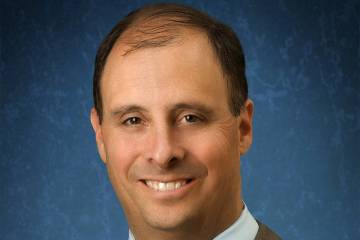
Gus Faucher, senior vice president and chief economist of The PNC Financial, said Las Vegas is the definition of discretionary consumer spending.
“Nobody needs to come to Las Vegas. People enjoy coming to Las Vegas, but the potential is out there with weaker consumer confidence and concerns about tariffs and concerns about inflation,” Faucher said. “Growth in Las Vegas is likely to be weaker than national growth in the near term until consumers are more confident the economy is stabilizing.”
There are concerns that the U.S. is withdrawing from the global economy and trading partners and international visitors are upset about what’s happening in how the U.S. is treating their countries, Faucher said.
“That’s a real concern, and can do long-range damage to the local economy if international tourists don’t want to come to the United States and just don’t want to come to Las Vegas because of the political climate.”
Las Vegas has changed since the 1990s with people no longer spending two thirds of their money on gaming. That’s down to one third as people spend on retail, restaurants and sports and entertainment.
“Gaming is still very important to our economy and our Strip operators, but it’s not where the growth is,” Woods said. “But it’s stable. Where you have seen the business model shift is more the entertainment options and more of high-end food, dining, shows and sports. That’s why it’s important for our economy. Adding these extra things gives people a reason to come back.”