
Nevada’s casino gaming lawyers heard pitches at their annual conference from the Las Vegas A’s and how the industry is threatened by sports prediction markets that are proliferating across the nation.
This month, the Nevada State Bar hosted its Gaming Law Conference at the Suncoast in Summerlin.
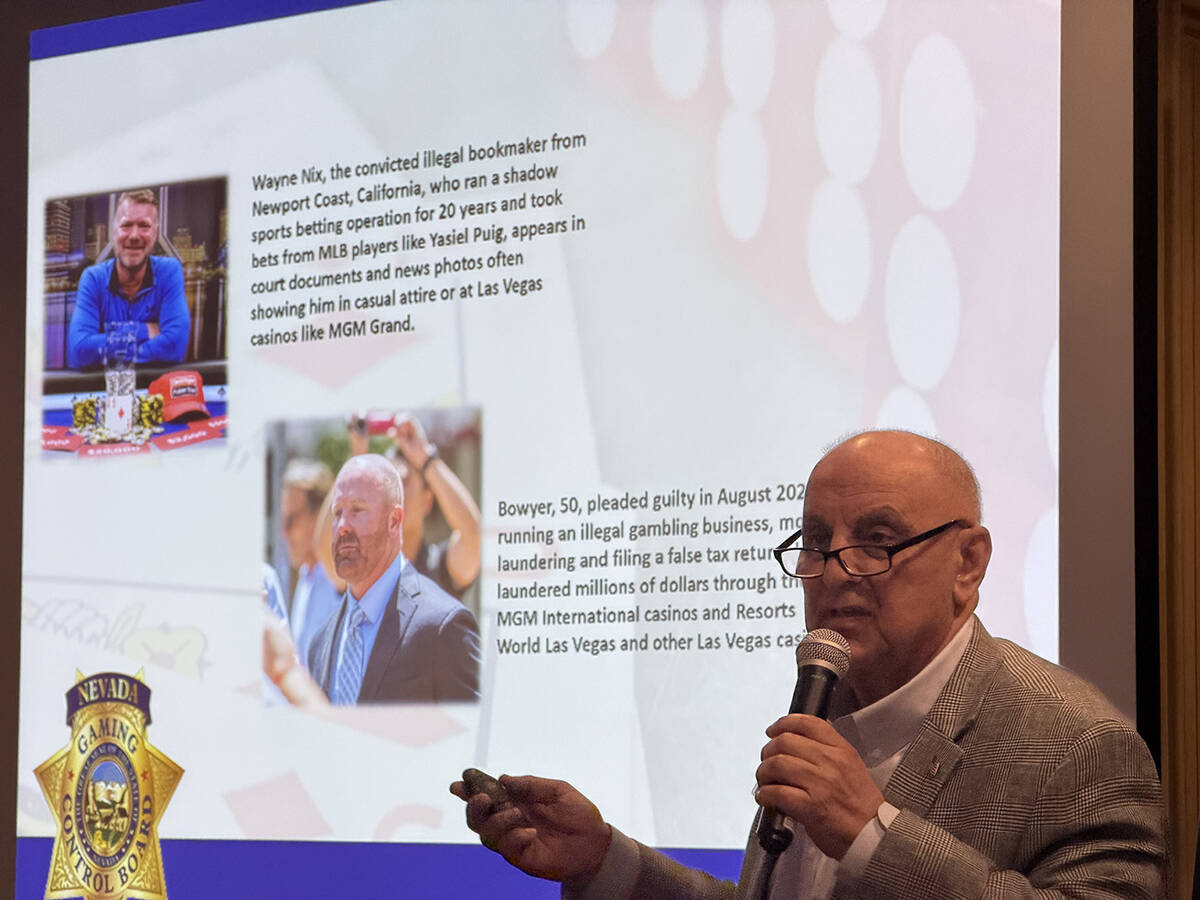
The No. 1 issue raised during the all-day conference was by Nevada Gaming Control Board Chairman Mike Dreitzer calling sports prediction markets an “existential” threat to the state’s economy if they expand beyond their current scope and include slots and other casino games.
Nevada is locked in a legal battle in federal court with Kalshi and others to prevent them from operating in the state. The operators say they are deriving their authority from the Commodity Futures Trading Commission in offering a form of sports wagering in Nevada and elsewhere around the country to the opposition from states and tribal governments. Last month, online sports betting operator FanDuel, which worked with Boyd Gaming, gave up its Nevada license to pursue the sports prediction market landscape and DraftKings dropped its bid for a Nevada license.
Last month when speaking to regulators, MGM Resorts International CEO Bill Hornbuckle applauded Nevada gaming regulators for standing up against sports betting prediction markets.
“I do want to thank the (Nevada Gaming) Board for its clarity around predictive markets,” Hornbuckle said. “The clarity helps us. Obviously, we have some work to do in some other states and you’ve all followed that story closely. It’s sports betting. Full stop. We’re keeping an eye on everything that’s active and ultimately we’ll see what we can do to make sure it comes in line with proper regulation and proper tax.”
On Friday, Dreitzer told the gaming lawyers and continues to warn casino operators that they risk their licenses in Nevada if they get into the prediction market business in other states without going through any regulatory process. “With prediction markets, it’s Nevada’s position that it’s illegal betting,” Dreitzer said. “Individuals who want to participate in that conduct in this state, there’s a way to do so legally and that’s within the regulatory structure. I can’t and won’t comment with respect to what’s going on with the courts, but I can say we have been at this for 70 years, Nevada is the gold standard of regulation, and there’s a reason for that.”
Dreitzer said it’s a major issue for Nevada and its gaming operators that have casinos across the country because the sports prediction market operators can go beyond sports and offer online slots and other types of casino gaming.
“We don’t want to end up with prediction casinos,” Dreitzer said. “We have to do everything we can to respond to this. Make no mistake, for those who seek to be involved, there is a way to do it, but they must do so in accordance with Nevada state law and broadly with state laws that have been established and done well in other jurisdictions as well for many years.”
Virginia Valentine, the CEO of the Nevada Resort Association told the gaming lawyers the industry brought up the issue to the state’s lawmakers by saying it’s competing against illegal activity, where there are no rules against money laundering and about paying state taxes from their proceeds.
“We’re facing a lot of headwinds and what can we do in the Legislature to help avoid some of these threats and challenges emerging today?” Valentine asked.
Nevada State Senator Majority Leader Nicole Cannizzaro told gaming lawyers they have to be concerned about the health of gaming in the state, since it’s critical to the economy and the state’s tax revenue. It’s important to educate lawmakers because it’s an issue that hasn’t been brought up in terms of the need for regulation.
“Being able to establish that with the Legislature from a public policy perspective is important,” Cannizzaro said. “Then it’s easier to say prediction markets may be harmful to the state’s biggest industry, and this is why we should consider regulating it. Having things like that operate outside of the purview of what we traditionally regulate in the state has implications for our tax base and implications for employment throughout the state and is detrimental to what we have established with gaming throughout the state. Those are topics definitely coming to us.”
Mark Badian, the president of the Las Vegas Athletics, talked about the ongoing construction of the $2 billion baseball stadium on the former Tropicana Las Vegas site. It will seat 30,000 people and can hold 3,000 for standing room only.
“The building itself is the smallest building in baseball,” Badian said. “Most football stadiums are between 1.5 million square feet and up to 3 million square feet. Allegiant is about 1.8 million. Baseball stadiums are about 1.1 to 1.2 million to 1.7 million. Arenas are from 600,000 to about 1 million. This baseball stadium is 960,000 square feet — the smallest building in Major League Baseball. It’s by necessity. It’s a small footprint of only 9 acres and by design. The newest iteration of stadiums and ballparks are smaller. They are expensive to build and the most expensive seats are the worst seats in the ballpark so it doesn’t make sense to build them anymore. Allegiant Stadium was the second smallest football stadium that was built.”
Badain said it will have the highest level of premium seating in any ballpark and luxury suites and club seats with an additional amenity that most markets are clamoring for, especially in Las Vegas.
“At Allegiant, there are 8,000 club seats, and we sold 7,000 in 55 days. One might say we underpriced it and the second is this market has absolutely staggering demand for premium products,” Badain said. “Many in this room know that because you are at properties that cater to that premium product.
In Las Vegas, there’s no season ticket base now but there are 2.5 million residents and within that there is a large group of affluent discretionary spenders.
“They have proven they want the best experience,” Badain said. “If you moved here over other options, it’s because you like to do things — go out, go to resorts and eat and go to sporting events since Las Vegas is now the sports capital of the world. We have the resort corridor.”
While the resort corridor bought only 800 seats at Allegiant Stadium, but 25 to 30 of the luxury boxes, Badain said.
“We will probably see similar numbers of the resort corridor buying tickets,” Badain said. “Then you have 45 million tourists coming to town that are going to buy seats. Then you have the robust secondary market in the world. The prices at Allegiant are the highest in the NFL and the secondary market for the Knights is robust even though that’s more of a locals buy. You have five markets to sell and that’s an advantage this market provides that no other market does. And it won’t be too long before basketball is here.’’
The stadium, which is six months into a 21-month build, will hold 35,000 to 36,000 for concerts. Badain said it’s on track for a 2028 opening.
The project is moving along,” Badain said. “It is like building a wedding cake so everything behind home plate and out the first and third base the concrete is being poured. They are building the second deck by Christmas. You will start to see it take shape over the next couple of months.”
Badain, who previously worked on an effort to build an area for a potential NBA expansion team to Las Vegas, said If anyone that’s going to call themselves an entertainment company, better have a footprint here.
“It’s always been a great sports market,” Badain said. “It was just an archaic feeling that gaming was going to have a negative influence. This is probably the safest market because of the regulation. It’s only a matter of time before the NBA is actually here.”